Travel Guide
WasgamuwaNationalParkSriLanka:ElephantSafari,Wildlife&TravelGuide
9/25/2026 · 5 min read
Wasgamuwa National Park Sri Lanka: Elephant Safari, Wildlife & Travel Guide
9/25/2026•5 min read•Travel Guide
Wasgamuwa National Park, Sri Lanka: A Wild and Less-Explored Elephant Safari
If you are looking for a quieter and more adventurous wildlife experience in Sri Lanka, away from some of the country's busiest safari destinations, Wasgamuwa National Park deserves a place on your itinerary. 🐘🌿🇱🇰
Located between the Matale and Polonnaruwa districts, Wasgamuwa is a fascinating combination of wildlife, rivers, forests, wetlands and ancient Sri Lankan heritage.
The park is particularly known for its Sri Lankan elephants, which can sometimes be seen in large herds. It is also recognised as an important bird area and supports a remarkable variety of mammals, reptiles, amphibians, fish, butterflies and plant species.
But Wasgamuwa offers something more than a wildlife safari.
Its relatively remote character, surrounding rivers and connection with the history of the Mahaweli Development Project give the park a distinctive atmosphere.
For travellers who enjoy getting beyond the most familiar tourist routes, Wasgamuwa can be an unforgettable part of a Sri Lanka adventure.
🐘 Why Visit Wasgamuwa National Park?
Wasgamuwa National Park was declared in 1984 as part of the response to the Mahaweli Development Project, providing a refuge for wildlife displaced by development and changes to their former habitats.
Today, the park is one of Sri Lanka's protected areas where visitors can experience large gatherings of elephants.
Sri Lanka Tourism reports that the park supports a herd of around 150 Sri Lankan elephants, alongside numerous other mammal species.
The park is also notable for its biodiversity.
You can potentially encounter:
🐘 Sri Lankan elephants
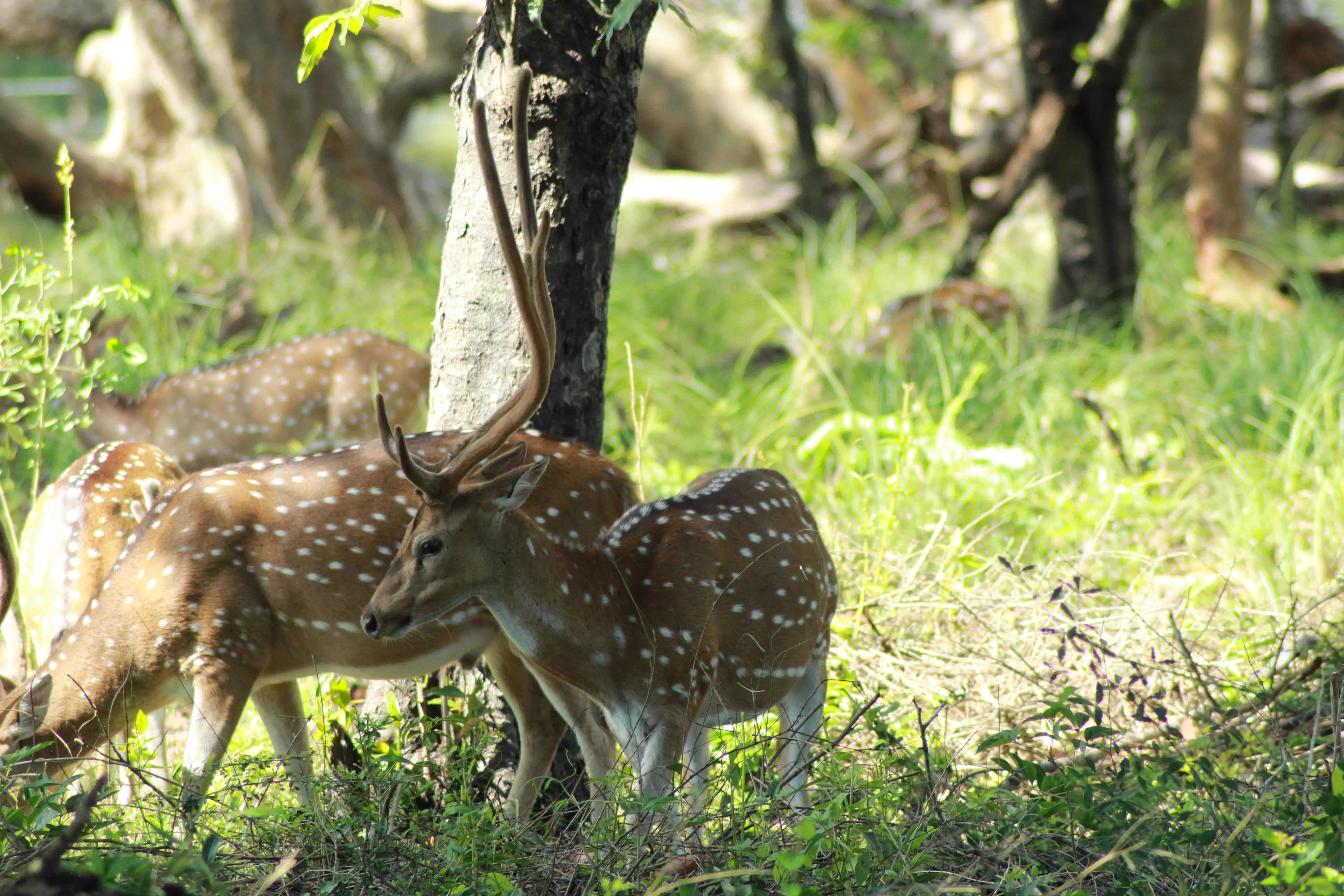
🦌 Spotted deer
🐃 Wild water buffalo
🐗 Wild boar
🐒 Purple-faced langurs
🐒 Toque macaques
🐆 Sri Lankan leopards
🐻 Sloth bears
🐊 Mugger crocodiles
🦎 Water monitors
🦚 Peafowl
🦅 Birds of prey
🐦 Many endemic and migratory bird species
Leopards and sloth bears are present but considered rare sightings, so they should never be treated as guaranteed safari encounters.
🌿 A National Park Surrounded by Rivers
One of the interesting characteristics of Wasgamuwa is its natural setting.
The park lies within the Central and North Central regions of Sri Lanka, around the Matale and Polonnaruwa districts.
Its rivers and waterways have helped give the area a relatively isolated character.
The landscape includes:
Riverine forests
Dry forests
Grasslands
Wetlands
Streams
Reservoirs
Open plains
This variety of habitats helps explain why Wasgamuwa supports such a wide range of wildlife.
Sri Lanka Tourism records more than 150 plant species in the park, as well as 23 mammal species and 143 recorded bird species.
🐘 The Elephants of Wasgamuwa
For many visitors, the elephants are the main reason to come.
Wasgamuwa is one of the Sri Lankan national parks where elephants can gather in impressive numbers.
During the right season, you may see elephants:
feeding in open grasslands...
walking through the forest...
drinking near waterways...
or
moving together as a family herd.
There is something very special about seeing a Sri Lankan elephant moving freely through a natural landscape rather than viewing it in captivity.
And because wildlife is unpredictable, every safari can be different.
You may spend time searching before suddenly discovering an elephant herd just beyond the trees.
📅 When Is the Best Time to Visit Wasgamuwa?
According to Sri Lanka Tourism, November to May is particularly favourable for viewing large elephant herds in Wasgamuwa. During other parts of the year, elephants may move towards areas including Minneriya and Kaudulla National Parks.
This seasonal movement is an important consideration when planning your Sri Lanka wildlife itinerary.
November–May
This period can provide good opportunities for travellers specifically interested in elephant herds.
Other months
Wildlife remains present, but elephant distribution can change seasonally.
If elephants are your primary reason for visiting, discuss your travel dates with a local wildlife specialist before deciding which national park to include.
🐦 Wasgamuwa for Birdwatchers
Wasgamuwa is not only an elephant destination.
It is also recognised as an Important Bird Area and supports a diverse bird population. Sri Lanka Tourism records 143 bird species, including eight endemic species.
Birdwatchers may encounter species including:
Sri Lanka junglefowl
Red-faced malkoha
Yellow-fronted barbet
Lesser adjutant
Painted stork
Black-headed ibis
Eurasian spoonbill
Peafowl
Sri Lanka frogmouth
The riverine forests and reservoirs provide particularly interesting habitats for birdlife.
If you enjoy bird photography, bring binoculars and a suitable telephoto lens.
🐆 Could You See a Leopard or Sloth Bear?
Yes, but these should be considered rare sightings rather than guaranteed attractions.
Sri Lanka Tourism lists both the Sri Lankan leopard and sloth bear among the mammals found in Wasgamuwa, while noting that they are rare in the park.
This is an important point when planning a safari.
A responsible safari operator should never promise that you will see a particular wild animal.
Instead, the excitement comes from exploring the ecosystem and discovering whatever wildlife happens to be active on that particular day.
🐊 Reptiles and Other Wildlife
The biodiversity of Wasgamuwa extends well beyond mammals and birds.
The park's water bodies support reptiles such as:
Mugger crocodiles
Water monitors
Other lizards
Snakes
Sri Lanka Tourism records 17 reptile species, including five endemic species. The park also supports fish and butterfly diversity, with eight endemic butterfly species among approximately 50 recorded species.
For nature lovers, this makes Wasgamuwa much more than an elephant safari destination.
🏛️ Wasgamuwa and Ancient Sri Lankan History
One of the most fascinating aspects of Wasgamuwa is its connection with Sri Lanka's ancient cultural landscape.
The wider region around the park contains important historical and archaeological sites.
Sri Lanka's official Ramayanaya Yathra material also identifies Yudhaganawa, located within Wasgamuwa National Park, as a site associated with the Ramayana tradition and notes that it can be accessed by 4WD jeep, with a wildlife safari possible.
For travellers interested in Sri Lankan history, mythology and culture, this creates an unusual combination:
Wildlife + wilderness + ancient stories.
🐘 Yudhaganawa: A Unique Stop Inside Wasgamuwa
According to Sri Lanka Tourism's Ramayanaya Yathra material, Yudhaganawa is traditionally associated with the battlefield of the Ramayana story.
The site is located inside the jungle area of Wasgamuwa and is accessible by four-wheel-drive vehicle.
Whether you visit because of the cultural tradition, the landscape or simply curiosity, it can add another dimension to a Wasgamuwa journey.
For travellers following Sri Lanka's Ramayana Trail, this can be particularly interesting.
🚙 How to Get to Wasgamuwa National Park
Wasgamuwa has several possible approaches depending on your Sri Lanka itinerary.
From Kandy
One route is via the Kandy–Mahiyangana Road, turning at Hasalaka and continuing through Wilgamuwa towards Wasgamuwa.
Sri Lanka Tourism specifically identifies the Hasalaka route via Wilgamuwa as an access route to the national park.
From Matale
Travellers coming from Matale can travel towards Laggala and Wilgamuwa before continuing towards the park.
From Polonnaruwa
Wasgamuwa is also accessible from the Polonnaruwa side, making it possible to combine the park with Sri Lanka's ancient cultural triangle.
From Colombo
Sri Lanka Tourism lists Wasgamuwa at approximately 225 km from Colombo.
Because road conditions, traffic and the chosen route affect journey times, it is better to plan the journey by route rather than relying only on a fixed driving-time estimate.
🗺️ Wasgamuwa on a Sri Lanka Travel Route
Wasgamuwa can be particularly interesting for travellers who want to combine wildlife with the central highlands and ancient cities.
For example:
Route 1
Kandy → Wasgamuwa → Polonnaruwa
This is an excellent combination of mountain scenery, wildlife and ancient Sri Lankan heritage.
Route 2
Kandy → Mahiyanganaya → Wasgamuwa → Polonnaruwa
A more adventurous route through the interior of Sri Lanka.
Route 3
Kandy → Wasgamuwa → Minneriya → Sigiriya
A wildlife-focused journey followed by the ancient cultural heartland.
Route 4
Matale → Wasgamuwa → Polonnaruwa → Minneriya
Ideal for travellers interested in nature, wildlife and ancient Sri Lankan history.
🏕️ Staying Near Wasgamuwa
If you want to experience Wasgamuwa without rushing, consider staying overnight near the park.
The Department of Wildlife Conservation lists several wildlife bungalows associated with Wasgamuwa, including Gale Bungalow, Kadurupitiya, Mahaweli and Wavulebe, with the relevant park office information provided for reservations.
There are also private accommodation options in the surrounding area.
Staying nearby has an important advantage:
You can start your safari without a long drive from another city.
🎟️ National Park Entry and Safari Permits
Wasgamuwa is a protected area administered under Sri Lanka's wildlife conservation system.
The Department of Wildlife Conservation states that visitors enter national parks with permits issued under the relevant regulations and fees.
The DWC also provides an online Day Visitor ePermit reservation system. Visitors can select the national park and date, provide group and vehicle information, make payment and retain the receipt for presentation at the entrance.
Because fees and operational arrangements can change, check the latest DWC information before your journey.
📷 Photography Tips for Wasgamuwa
Wasgamuwa can be excellent for wildlife photography.
Bring:
Camera with zoom or telephoto lens
Binoculars
Extra batteries
Power bank
Hat
Sunglasses
Drinking water
Light, comfortable clothing
Most importantly, be patient.
Wildlife photography isn't about forcing an encounter.
Wait.
Watch.
Listen.
Sometimes the most memorable moment is when an elephant quietly emerges from the forest after you have been waiting for several minutes.
🌱 Responsible Safari Tourism
Wasgamuwa is a protected ecosystem, and visitors have a responsibility to help protect it.
During your safari:
Never feed wild animals.
Never attempt to touch wildlife.
Do not ask your driver to chase animals.
Keep noise to a minimum.
Do not throw plastic or food into the park.
Stay inside the designated vehicle.
Follow instructions from wildlife officials and your guide.
Give animals space.
The objective is not to get as close as possible.
The objective is to observe wildlife without disturbing it.
🐘 Wasgamuwa vs Udawalawe: Which Experience Is Different?
Travellers often compare Sri Lanka's elephant parks.
Udawalawe is famous for its open landscapes and strong reputation for elephant sightings.
Wasgamuwa offers a more remote-feeling combination of elephants, forests, rivers, birdlife and historical interest.
The choice depends on your route and what you want to experience.
For a traveller staying around Kandy and the Cultural Triangle, Wasgamuwa can fit naturally into an itinerary without requiring a major detour to the southern part of the island.
For a traveller travelling between Ella and the southern coast, Udawalawe may fit more naturally into the route.
🌴 Why Wasgamuwa Is Special
Wasgamuwa is not necessarily the first national park international visitors hear about when planning Sri Lanka.
And that is part of its appeal.
Here you can experience:
🐘 Wild elephants
🌿 Ancient forests
🌊 Rivers and wetlands
🐦 Exceptional birdlife
🏛️ Ancient cultural connections
🚙 Adventure by 4WD safari
🇱🇰 A less-familiar side of Sri Lanka
It is a destination for travellers who want to explore beyond the standard tourist route.
❤️ Is Wasgamuwa National Park Worth Adding to Your Sri Lanka Itinerary?
If your Sri Lanka holiday includes Kandy, Mahiyanganaya, Matale or Polonnaruwa, Wasgamuwa can be a fascinating wildlife addition.
It is particularly interesting for travellers who want to combine:
wildlife + elephants + nature + culture + adventure.
And if you visit during the period when large elephant herds are more commonly seen, you may have the opportunity to witness one of Sri Lanka's most impressive wildlife spectacles.
Just remember that nature does not operate according to a timetable.
You can choose the park. You can choose the season. But the wildlife chooses the moment.
🇱🇰 Plan a Wasgamuwa Safari with Tranquil Sri Lanka Tours
Wasgamuwa can be incorporated into a tailor-made Sri Lanka journey connecting Kandy, Mahiyanganaya, Polonnaruwa, Minneriya, Sigiriya and other destinations.
At Tranquil Sri Lanka Tours, we can help plan your route, accommodation and safari arrangements around your travel dates and interests.
Whether you are interested in elephants, wildlife photography, Sri Lankan culture, ancient history, hiking, tea country or a complete island tour, we can create a Sri Lanka itinerary that combines the experiences you want.
🐘 Wildlife • 🌿 Nature • 🏛️ Heritage • ⛰️ Mountains • 🏖️ Beaches
Discover the quieter side of Sri Lanka with Tranquil Sri Lanka Tours. 🇱🇰