Blog
UNESCO World Heritage Sites in Sri Lanka: 8 Places You Should Visit
2 Oct 2026 · 5 min read
UNESCO World Heritage Sites in Sri Lanka: 8 Places You Should Visit
•5 min read•Blog
UNESCO World Heritage Sites in Sri Lanka: 8 Places You Should Visit
Sri Lanka may be a small island, but it is home to an extraordinary concentration of natural landscapes, ancient cities, sacred places and historic architecture. From mist-covered mountain forests to ancient kingdoms and colonial fortifications, Sri Lanka's heritage reflects more than two thousand years of history and a remarkable relationship between people, nature and culture.
Sri Lanka currently has eight UNESCO World Heritage Sites: six cultural sites and two natural sites. These internationally recognized places offer travelers the opportunity to experience some of the island's most significant natural and cultural treasures.
Whether you are interested in wildlife, ancient civilizations, Buddhist heritage, architecture, photography or breathtaking landscapes, visiting Sri Lanka's UNESCO World Heritage Sites can be an unforgettable part of your journey.
Sri Lanka's Natural World Heritage Sites
Sri Lanka has two natural properties inscribed on the UNESCO World Heritage List: Sinharaja Forest Reserve and the Central Highlands of Sri Lanka.
1. Sinharaja Forest Reserve – UNESCO World Heritage Site, 1988
Located in the southwestern part of Sri Lanka, Sinharaja Forest Reserve is one of the island's most important remaining areas of tropical rainforest.
The name Sinharaja is commonly translated as "Lion Kingdom", and the forest is famous for its exceptional biodiversity. The reserve provides habitat for many endemic species of plants, birds, mammals, reptiles and amphibians.
For nature lovers and wildlife enthusiasts, Sinharaja offers a very different experience from Sri Lanka's dry-zone national parks. Instead of open plains and safari vehicles, visitors can explore dense rainforest on guided walking trails.
The forest is particularly famous for its endemic birdlife. Travelers interested in birdwatching can encounter several species that are found only in Sri Lanka.
The humid rainforest environment, giant trees, streams, waterfalls and rich vegetation also make Sinharaja an excellent destination for travelers who enjoy hiking and experiencing Sri Lanka's natural environment at a slower pace.
Best for: Rainforest walks, birdwatching, wildlife, photography and nature lovers.
UNESCO inscription: 1988
Location: Southwestern Sri Lanka
________________________________________
2. Central Highlands of Sri Lanka – UNESCO World Heritage Site, 2010
The Central Highlands of Sri Lanka represent one of the most important natural landscapes in the country.
This UNESCO World Heritage property includes three major protected areas:
• Peak Wilderness Protected Area
• Horton Plains National Park
• Knuckles Conservation Forest
The highlands are characterized by dramatic mountains, cloud forests, grasslands, waterfalls and unique ecosystems. The region is also home to numerous endemic species.
One of the best-known places within the property is Horton Plains, famous for its high-altitude landscape and the popular hiking route to World's End, where the plateau drops dramatically into the valleys below.
The Knuckles Mountain Range offers another spectacular experience, with rugged peaks, forests, streams, waterfalls and rural landscapes.
Meanwhile, the Peak Wilderness surrounds the sacred mountain of Sri Pada, also known as Adam's Peak, which attracts pilgrims from different religious traditions.
The Central Highlands are particularly appealing to travelers who want to combine hiking, scenery and cultural experiences during their Sri Lanka holiday.
Best for: Hiking, mountains, waterfalls, wildlife, photography and nature experiences.
UNESCO inscription: 2010
Location: Central and south-central Sri Lanka
________________________________________
Sri Lanka's Cultural World Heritage Sites
Sri Lanka's six cultural UNESCO World Heritage Sites represent different chapters of the island's history, from ancient Buddhist kingdoms to colonial-era architecture.
3. Sacred City of Anuradhapura – UNESCO World Heritage Site, 1982
Anuradhapura was one of the most important ancient capitals of Sri Lanka and remained a major political and religious centre for centuries.
Today, the Sacred City of Anuradhapura is one of the most significant Buddhist heritage destinations in Sri Lanka.
The enormous archaeological area contains ancient stupas, monasteries, reservoirs, temples and other monuments that demonstrate the sophistication of Sri Lanka's ancient civilization.
One of the most important places within the sacred city is Sri Maha Bodhi, a sacred fig tree traditionally believed to have grown from a sapling of the original Bodhi tree under which the Buddha attained enlightenment in India.
Among the most impressive monuments are Ruwanwelisaya, Jetavanaramaya and Abhayagiri, which provide visitors with an extraordinary insight into the architectural achievements of ancient Sri Lanka.
Anuradhapura remains an important pilgrimage destination, and the atmosphere becomes especially meaningful during religious festivals and pilgrimage periods.
Best for: Buddhist heritage, ancient history, archaeology, photography and cultural tourism.
UNESCO inscription: 1982
Location: North Central Province
________________________________________
4. Ancient City of Polonnaruwa – UNESCO World Heritage Site, 1982
The ancient city of Polonnaruwa became the medieval capital of Sri Lanka after Anuradhapura.
Today, its impressive archaeological landscape contains ancient temples, royal buildings, stupas, reservoirs and sculptures.
One of the most famous attractions is Gal Vihara, where four remarkable Buddha images were carved into a single granite rock. The craftsmanship of these statues is among the highlights of Sri Lanka's ancient artistic heritage.
Polonnaruwa also demonstrates the extraordinary engineering abilities of ancient Sri Lankan civilization. The region's enormous irrigation reservoirs helped support agriculture and the development of the kingdom.
Exploring Polonnaruwa by bicycle is a popular way to experience the archaeological city, allowing visitors to travel between ancient monuments while enjoying the surrounding landscape.
Best for: Ancient history, archaeology, Buddhist art, cycling and photography.
UNESCO inscription: 1982
Location: North Central Province
________________________________________
5. Ancient City of Sigiriya – UNESCO World Heritage Site, 1982
Few landmarks in Sri Lanka are as instantly recognizable as Sigiriya Rock.
Rising dramatically above the surrounding forests, Sigiriya is an ancient rock fortress and palace complex that represents one of the country's most extraordinary archaeological achievements.
Visitors climb a series of stairways and pathways toward the summit, passing the famous Sigiriya frescoes, ancient graffiti, landscaped gardens and the remains of the royal complex.
The Lion Gate is another famous feature of Sigiriya. Although only the enormous lion paws remain today, they provide an indication of the monumental entrance that once welcomed visitors to the fortress.
From the summit, travelers can enjoy spectacular views across the surrounding forests and countryside.
For many visitors, Sigiriya is not simply an archaeological site but one of the defining experiences of a Sri Lanka journey.
Best for: Ancient history, archaeology, hiking, photography and panoramic views.
UNESCO inscription: 1982
Location: Central Province
________________________________________
6. Sacred City of Kandy – UNESCO World Heritage Site, 1988
Surrounded by mountains in central Sri Lanka, Kandy was the last royal capital of the island's ancient kingdoms.
The city's most important religious landmark is the Temple of the Sacred Tooth Relic, which houses one of the most revered Buddhist relics in Sri Lanka.
Kandy's cultural importance extends beyond the temple itself. The historic city, lake, surrounding hills and traditional architecture create a distinctive atmosphere that makes it one of Sri Lanka's most popular cultural destinations.
The city is also famous for the annual Kandy Esala Perahera, one of Sri Lanka's most important religious and cultural festivals.
For travelers interested in understanding Sri Lanka's Buddhist traditions and royal history, Kandy provides an important connection between the country's ancient past and living cultural heritage.
Best for: Buddhist culture, temples, history, festivals and mountain scenery.
UNESCO inscription: 1988
Location: Central Province
________________________________________
7. Old Town of Galle and its Fortifications – UNESCO World Heritage Site, 1988
On Sri Lanka's southern coast lies the historic Old Town of Galle and its Fortifications.
The famous Galle Fort combines Sri Lankan, Portuguese, Dutch and later architectural influences. Its massive defensive walls surround a historic town filled with old buildings, narrow streets, churches, residences, museums, cafés, galleries and boutique businesses.
The fort was initially established by the Portuguese and later extensively developed by the Dutch. Its strategic location along the southern coast made Galle an important centre for maritime trade.
Today, visitors can walk along the fort walls, explore the historic streets and watch the sunset over the Indian Ocean.
Galle Fort is particularly attractive to travelers interested in history, architecture, photography and coastal culture.
Best for: Colonial history, architecture, photography, shopping, cafés and sunset walks.
UNESCO inscription: 1988
Location: Southern Province
________________________________________
8. Rangiri Dambulla Cave Temple – UNESCO World Heritage Site, 1991
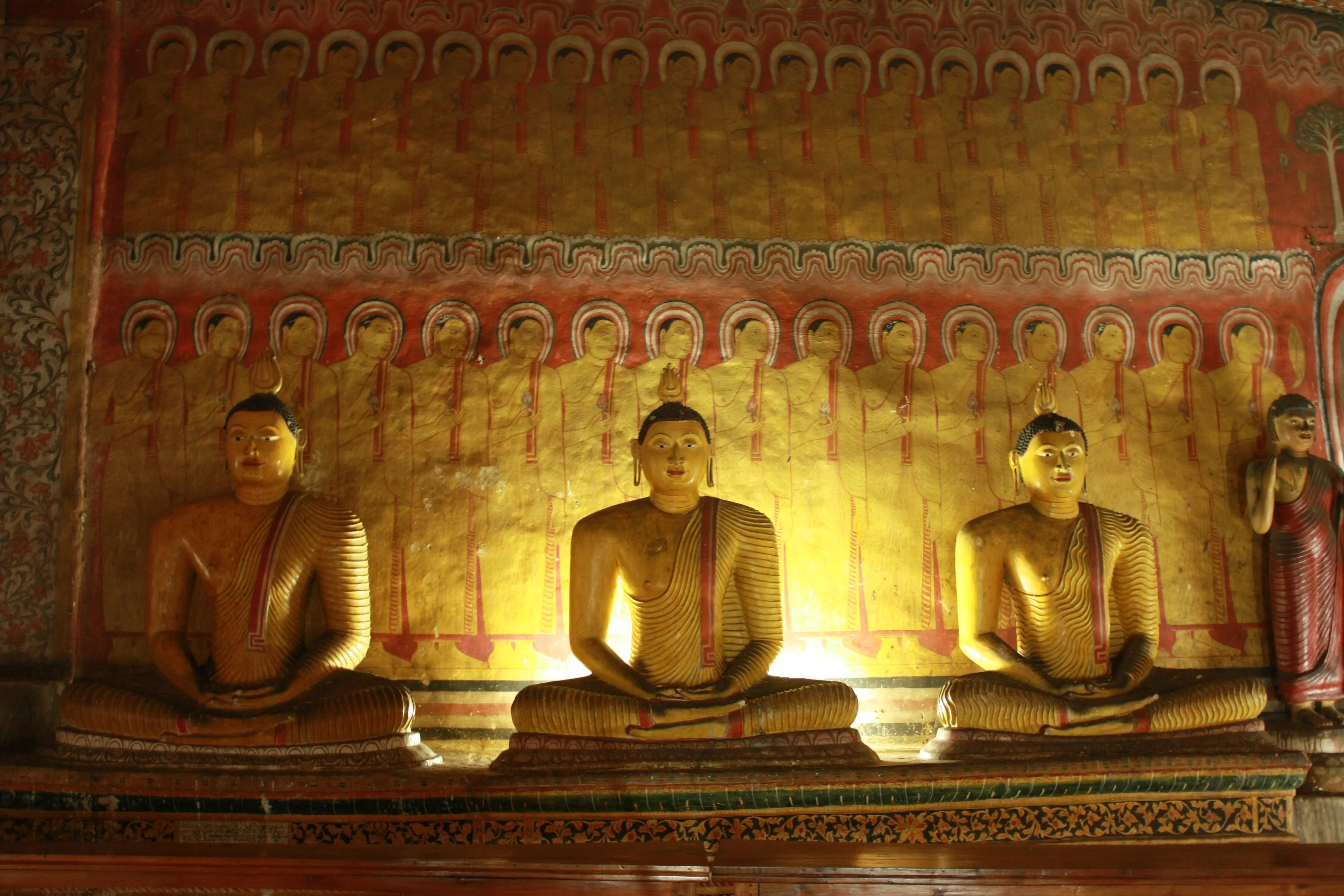
The Rangiri Dambulla Cave Temple, commonly known as the Golden Temple of Dambulla, is one of Sri Lanka's most important Buddhist religious sites.
The complex consists of five major cave sanctuaries, containing an extraordinary collection of Buddhist statues, paintings and religious artwork.
The caves have been developed and maintained over many centuries, creating a remarkable combination of natural rock formations and human-made religious art.
Inside the caves, visitors can see numerous Buddha statues as well as extensive murals covering ceilings and walls. The paintings provide an important record of Sri Lanka's Buddhist artistic traditions.
Dambulla is also conveniently located close to several major attractions in Sri Lanka's Cultural Triangle, including Sigiriya and the ancient cities of Anuradhapura and Polonnaruwa.
Best for: Buddhist art, religious heritage, history, photography and cultural experiences.
UNESCO inscription: 1991
Location: Central Province
________________________________________
A Journey Through Sri Lanka's UNESCO Heritage
One of the great advantages of visiting Sri Lanka is that several UNESCO World Heritage Sites can be combined into a single journey.
A cultural journey could begin in Anuradhapura, continue to Polonnaruwa, explore Sigiriya and Dambulla, and then travel south toward Kandy.
From Kandy, travelers can continue into the Central Highlands, exploring the mountains, forests and hiking trails around Horton Plains, Knuckles or Peak Wilderness.
A completely different side of Sri Lanka can be experienced on the southern coast at Galle Fort, while Sinharaja provides an opportunity to explore one of the country's most important rainforests.
This combination allows travelers to experience ancient kingdoms, Buddhist heritage, colonial history, mountains, rainforests and coastal landscapes within one island.
Why Visit Sri Lanka's UNESCO World Heritage Sites?
Sri Lanka's UNESCO sites are more than a collection of historical monuments. Together, they tell the story of an island shaped by ancient civilizations, Buddhism, sophisticated irrigation systems, maritime trade, traditional architecture and extraordinary biodiversity.
For international travelers, visiting these sites can also provide a deeper understanding of Sri Lanka beyond its beaches and wildlife.
From the ancient cities of the Cultural Triangle to the misty mountains of the Central Highlands and the tropical forests of Sinharaja, each UNESCO site offers a different experience.
Sri Lanka UNESCO World Heritage Sites at a Glance
UNESCO Site Type Year Main Experience
Sinharaja Forest Reserve Natural 1988 Rainforest & wildlife
Central Highlands of Sri Lanka Natural 2010 Mountains, hiking & biodiversity
Sacred City of Anuradhapura Cultural 1982 Ancient Buddhist civilization
Ancient City of Polonnaruwa Cultural 1982 Ancient ruins & Buddhist art
Ancient City of Sigiriya Cultural 1982 Rock fortress & archaeology
Sacred City of Kandy Cultural 1988 Buddhist heritage & living culture
Old Town of Galle and its Fortifications Cultural 1988 Colonial history & architecture
Rangiri Dambulla Cave Temple Cultural 1991 Buddhist caves & paintings
Plan Your Sri Lanka UNESCO Heritage Journey
A visit to Sri Lanka can combine UNESCO World Heritage Sites with wildlife safaris, beaches, tea country, scenic train journeys, hiking and authentic local experiences.
Whether you are planning a Sri Lanka cultural tour, UNESCO heritage tour, wildlife and nature holiday, or a complete island tour, these eight UNESCO sites provide some of the most memorable places to discover the country's history and natural beauty.
Sri Lanka is a destination where ancient kingdoms, sacred traditions, tropical forests, mountains and the ocean come together on one remarkable island.