Blog
SriLanka:GemologicalFieldTours
9/13/2026 · 5 min read
Sri Lanka: Gemological Field Tours
9/13/2026•5 min read•Blog
Sri Lanka: One of the World's Best Destinations for a Gemological Tour
Sri Lanka is much more than a tropical island of beautiful beaches, ancient cities and wildlife. For gemstone enthusiasts, collectors, jewelry lovers, gemologists and serious buyers, Sri Lanka offers something truly special: the opportunity to experience a living gemstone industry with a history stretching back more than two thousand years.
Known historically as Ratna-Dweepa — the “Island of Gems”, Sri Lanka has been famous for its natural gemstones for centuries. Today, visitors can explore mining areas, gem markets, cutting workshops, laboratories, jewelry workshops and traditional trading centers while discovering how a gemstone travels from the earth to a finished jewel.
For anyone interested in learning about natural gemstones, Sri Lanka can be an exceptional destination for a gemological travel experience.
Why Choose Sri Lanka for a Gemological Tour?
Sri Lanka has a unique combination of natural gemstone resources, traditional mining knowledge, skilled lapidaries, experienced gem traders and a long-established jewelry industry.
A gemological tour in Sri Lanka can go far beyond simply visiting a jewelry shop. Depending on the itinerary, travelers can experience the different stages of the gemstone journey — from geological environments and traditional mining to sorting, cutting, polishing, identification, valuation and jewelry making.
This makes Sri Lanka particularly interesting for:
Gemologists and geology students
Gem and mineral collectors
Jewelry designers
Natural gemstone enthusiasts
Professional gemstone buyers
Jewelry retailers
Photographers and content creators
Travelers interested in traditional crafts and culture
Anyone fascinated by the journey of a gemstone from mine to jewelry
A Remarkable Diversity of Natural Gemstones
Sri Lanka is internationally recognized for its wide range of gemstones.
The island is particularly famous for its Ceylon sapphires, including blue, yellow, pink, white, green, purple, padparadscha and color-changing sapphires. Sri Lanka is also known for many other gemstones, including chrysoberyl, alexandrite, star sapphires, star rubies, spinel, garnet, zircon, tourmaline, moonstone, topaz, beryl and quartz varieties.
One of the fascinating aspects of Sri Lankan gemstones is that different mining regions can produce different types, colors and qualities of material.
For a collector, this makes traveling through Sri Lanka an opportunity to understand gemstones not simply as finished products, but as geological treasures connected to particular landscapes and mining regions.
Experience Traditional Gem Mining
One of the most interesting parts of a Sri Lankan gem tour is seeing how traditional gemstone mining works.
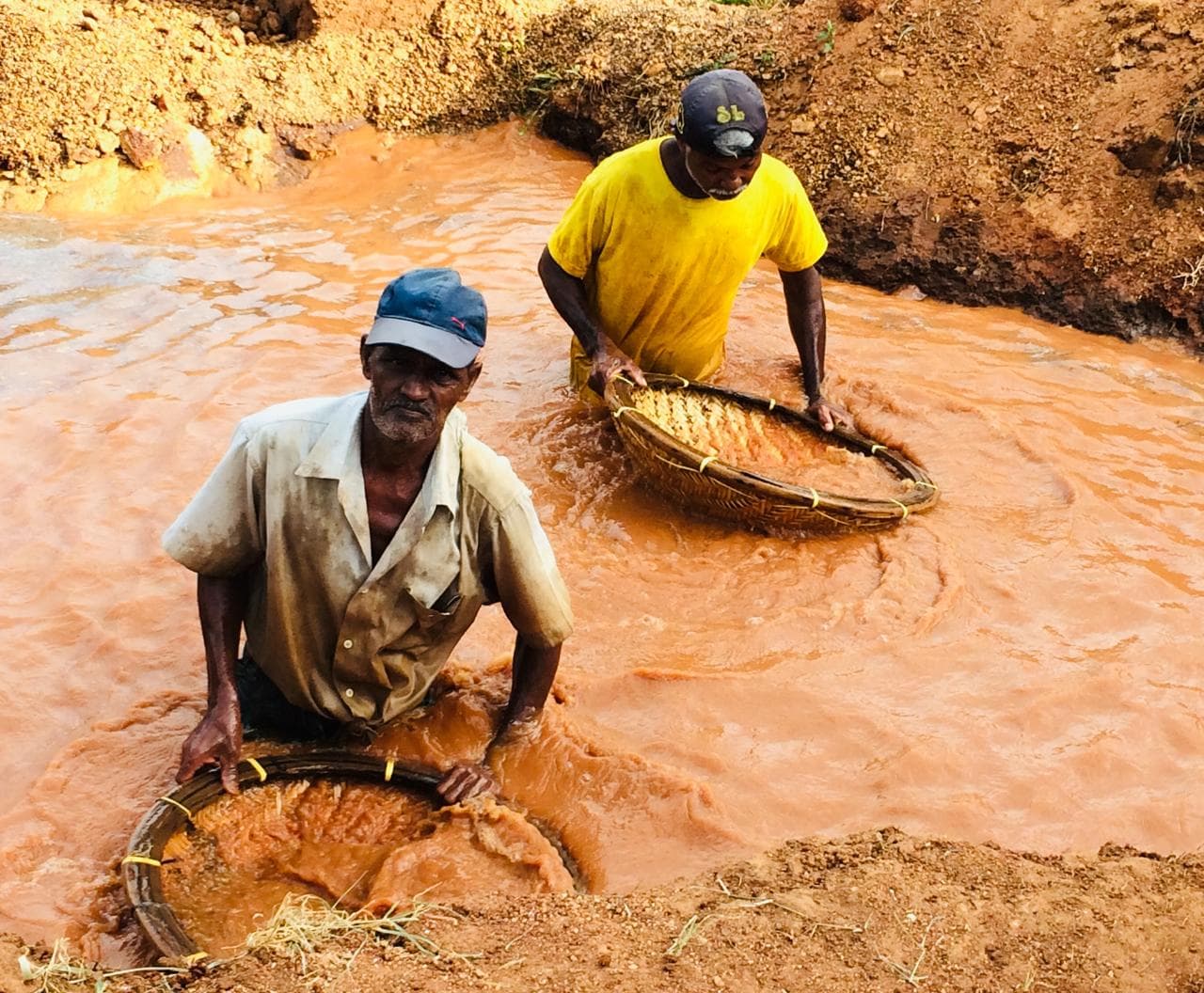
Sri Lanka has developed its own distinctive mining traditions over generations. In many areas, miners still use relatively simple techniques to recover gem-bearing gravel, while taking care to work with the natural environment.
Traditional gem mining can involve shafts, pits, tunnels, washing areas and manual recovery methods. Visitors who are able to experience these activities with responsible local operators can gain a much better understanding of the effort involved in finding even a small gemstone.
A gemstone that looks beautiful inside a jewelry showcase may represent days, weeks or even much longer periods of work before it reaches the market.
Visit Sri Lanka's Famous Gem Regions
A gemological journey can take travelers beyond the usual tourist routes and into some of Sri Lanka's most important gemstone-producing and trading regions.
Ratnapura — The City of Gems
Ratnapura is perhaps the most famous gemstone center in Sri Lanka and is often considered the heart of the country's gem industry.
The surrounding region has produced enormous quantities of gemstones and remains an important center for mining, trading, cutting and jewelry.
A visit to Ratnapura can provide opportunities to learn about traditional mining, visit gem businesses, see rough gemstones and understand how stones are evaluated and traded.
Elahera
The Elahera region is another historically important gemstone-producing area.
It is particularly interesting for travelers who want to understand Sri Lanka's gem-bearing geological environments and see how rural communities have traditionally been connected to gemstone mining.
Nivithigala and Rakwana
The areas around Nivithigala and Rakwana are also associated with Sri Lanka's gemstone industry.
These regions offer opportunities to explore the relationship between local communities, traditional mining and the natural landscapes in which gemstones are found.
Other Gemstone Areas
Depending on the purpose of the tour, a specialized itinerary can also include areas such as Okkampitiya, Kalugaga, Raththota, Mahiyanganaya and other gemstone-producing regions.
The experience can be designed around particular gemstones, geological interests or collecting objectives.
See How Rough Gems Become Beautiful Stones
Sri Lanka is not only a gemstone-producing country. It is also internationally respected for its gem cutting and lapidary traditions.
A rough gemstone can look very different from the finished stone. Skilled Sri Lankan cutters carefully study the rough material and decide how to cut it while balancing color, clarity, weight, brilliance and shape.
For a gem enthusiast, watching an experienced cutter work can be one of the highlights of a Sri Lankan gem tour.
Visitors can learn about:
Rough gemstone evaluation
Crystal orientation
Cutting styles
Faceting
Cabochon cutting
Polishing
Weight retention
Color optimization
Inclusions and clarity
Symmetry and proportions
Sri Lanka's experienced lapidaries have developed their skills through generations of knowledge, making the island an important destination for people interested in gemstone cutting.
Learn How Gemstones Are Identified and Valued
Buying a gemstone is not simply about looking at its color.
Professional gemstone evaluation involves understanding factors such as species, variety, color, clarity, cut, carat weight, treatments and origin-related characteristics.
A specialist gemological tour can introduce visitors to the scientific side of gemstone identification and valuation.
Sri Lanka also has established gemological laboratories and professional institutions that provide gemstone testing and certification services.
Travelers interested in purchasing valuable gemstones should always consider obtaining an independent laboratory report from a reputable gem laboratory, particularly for high-value stones.
A Long History of Gem Trading
Sri Lanka's gemstone industry is not a modern invention.
The island has been associated with gemstones and jewelry for more than two thousand years, and references to Sri Lankan gems can be found throughout historical accounts of trade in the Indian Ocean.
For centuries, gemstones have travelled from Sri Lanka to international markets through regional and overseas trading networks.
This long history has helped create a unique culture around gemstones — from miners and traders to cutters, jewelry makers and collectors.
A gemological tour therefore becomes more than a shopping trip. It becomes a journey through a living part of Sri Lanka's history.
Explore Open Gem Markets and Local Trading Centers
One of the most exciting experiences for gemstone enthusiasts is visiting local gem trading areas.
Depending on the itinerary and current market activity, travelers may be able to visit gemstone centers and markets in places such as:
Ratnapura, Nivithigala, Elahera, Rakwana, Raththota, Kandy, Kalugaga, Beruwala and other trading locations.
These markets can offer a very different experience from a conventional tourist jewelry store.
Visitors may encounter rough stones, mineral specimens, faceted gemstones, cabochons, dealers, cutters and jewelry makers.
However, gemstone buying should always be approached carefully. Price alone does not establish quality or authenticity. Serious buyers should work with reputable dealers, request appropriate laboratory documentation and understand treatments and disclosure requirements before making significant purchases.
From Gemstone to Handcrafted Jewelry
Sri Lanka's gemstone story does not end with cutting.
The country also has a long tradition of handcrafted jewelry making, with skilled goldsmiths and silversmiths creating rings, pendants, earrings, bracelets and other pieces.
A specialized tour can allow visitors to see how a gemstone is transformed into a finished piece of jewelry.
Travelers can learn about:
Traditional goldsmithing
Silver work
Stone setting
Handmade jewelry production
Custom jewelry design
Traditional Sri Lankan jewelry styles
Modern gemstone jewelry
For jewelry designers and collectors, seeing the entire process from rough gemstone to finished jewelry can provide valuable inspiration.
Responsible and Community-Based Gem Mining
Another important part of Sri Lanka's gemstone story is the connection between mining and local communities.
Traditional gemstone mining in Sri Lanka has historically involved local landowners, miners, workers, traders and other community members. In many areas, mining remains an important source of income for rural communities.
Sri Lankan gemstone mining can also provide an interesting example of relatively small-scale, traditional mining compared with large industrial mining operations.
Responsible gem tourism should encourage visitors to understand where gemstones come from, how mining affects the environment and how local communities benefit from the industry.
For modern gemstone buyers, traceability, responsible sourcing and community benefit are becoming increasingly important considerations.
Sri Lanka Is Easy to Explore
Another advantage of choosing Sri Lanka for a gemological tour is that gemstone regions can be combined with the country's other attractions.
A traveler can spend the morning learning about gemstones and later visit a historic city, tea plantation, wildlife park, rainforest or tropical beach.
Sri Lanka's relatively compact size makes it possible to create specialized itineraries combining:
Gemstones + Culture + Wildlife + Mountains + Tea + Beaches
This makes a gemological tour suitable not only for professional buyers but also for couples, families, photographers, collectors and travelers who want an unusual cultural experience.
A Safe and Professional Buying Experience
Sri Lanka has an established gemstone and jewelry industry serving both domestic and international customers.
The country's official institutions play an important role in regulating and facilitating the gemstone trade, including export procedures and industry services.
For international buyers, it is important to purchase through reputable businesses and understand the documentation and export requirements applicable to gemstones and jewelry.
A professional tour operator can also help arrange visits to established gem businesses, laboratories, cutting centers and jewelry workshops.
More Than a Gemstone Shopping Trip
The real value of a gemological tour is not simply buying a gemstone.
It is about understanding the story behind the stone.
Where was it found?
What type of geological environment produced it?
How was it recovered?
Was it treated?
Who cut it?
Why was it cut in that particular way?
How was its value determined?
Who transformed it into jewelry?
And how did the gemstone contribute to the local community?
When you understand these questions, a gemstone becomes much more than a beautiful object.
It becomes a piece of Sri Lankan geology, history, craftsmanship and culture.
Plan Your Sri Lanka Gemological Journey
For gemstone lovers, collectors, jewelry professionals and curious travelers, Sri Lanka offers an extraordinary opportunity to experience the world of natural gemstones from close range.
From traditional mining villages and famous gemstone regions to cutting workshops, gem laboratories, trading centers and handcrafted jewelry workshops, Sri Lanka provides an unusually complete gemstone journey.
Whether you are searching for a Ceylon sapphire, building a mineral collection, studying gemology, looking for natural gemstones for jewelry production or simply fascinated by the treasures hidden beneath the Sri Lankan soil, a carefully planned gemological tour can reveal a completely different side of the island.
Come to Sri Lanka not only to see its gemstones — come to discover their story.