Blog
SigiriyaRockFortressSriLanka:ThePalaceintheSky&AncientLionRock
9/13/2026 · 5 min read
Sigiriya Rock Fortress Sri Lanka: The Palace in the Sky & Ancient Lion Rock
9/13/2026•5 min read•Blog
Sigiriya Rock Fortress Sri Lanka: The Palace & Fortress in the Sky
Rising dramatically above the lush green forests of central Sri Lanka, Sigiriya Rock Fortress is one of the island's most extraordinary historical attractions.
Often called Lion Rock, this enormous ancient rock rises nearly 200 metres above the surrounding landscape. At its summit are the remains of a remarkable royal complex, while the gardens, frescoes, ancient graffiti and monumental Lion's Paws reveal the extraordinary engineering and artistic achievements of ancient Sri Lanka.
For travelers visiting Sri Lanka, Sigiriya is one of the country's must-see attractions and a highlight of any cultural or historical tour.
The Story Behind Sigiriya
Sigiriya's history is closely connected with King Kasyapa, who ruled Sri Lanka during the fifth century AD.
According to the traditional historical account, Kasyapa was the son of King Dhatusena. After taking the throne, Kasyapa established his royal residence at Sigiriya and transformed the massive rock into an impressive fortified palace complex.
His half-brother Moggallana, the son of Dhatusena's principal queen, fled to India and later returned with an army.
Kasyapa prepared Sigiriya as a heavily defended royal stronghold, surrounded by walls, moats, gardens and sophisticated water systems.
The dramatic location gave the king both protection and an impressive royal residence overlooking the surrounding plains.
Sigiriya – A Palace in the Sky
Although Sigiriya is commonly described as a fortress, the remains on the summit suggest that it was much more than a military stronghold.
The summit covers approximately 1.6 hectares, and archaeological remains indicate that the area once contained buildings, courtyards, pools and other structures associated with the royal complex.
From the top of Sigiriya, the surrounding landscape stretches in every direction.
The combination of royal architecture, gardens, water management and spectacular views has led many people to describe Sigiriya as a "palace in the sky."
The Water Gardens
One of the first impressive features visitors encounter is the Water Gardens.
These beautifully landscaped gardens contain pools, fountains, channels, moats and small island structures.
An ancient underground and surface water-management system supplied water to different parts of the gardens and royal complex.
During the rainy season, some of the ancient fountains can still operate, demonstrating the sophistication of the hydraulic engineering used by the builders of Sigiriya.
The Water Gardens are a fascinating reminder that ancient Sri Lankan architecture was not only about massive structures — it also incorporated sophisticated landscape design and water technology.
The Sigiriya Frescoes
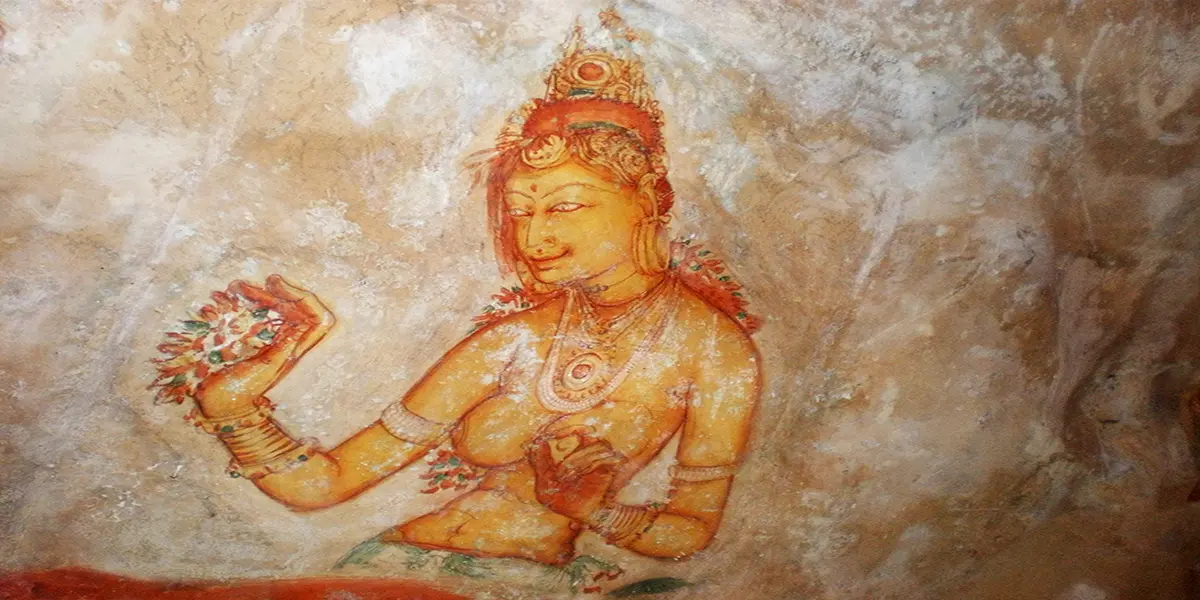
Halfway up the rock is one of Sigiriya's most famous attractions: the Sigiriya frescoes.
These paintings depict elegant female figures often referred to as the Sigiriya Damsels or Heavenly Maidens.
The vibrant paintings were created on a sheltered section of the rock and are among the finest surviving examples of ancient Sri Lankan art.
Only a small number of the original paintings survive today, making their preservation particularly important.
The artistic style has often been compared with ancient Indian paintings, including those associated with Ajanta.
Visitors should follow the site's photography rules and help protect these fragile works of art for future generations.
The Mirror Wall
As you continue along the pathway, you reach the famous Mirror Wall.
The wall was originally finished with a highly polished surface, creating a mirror-like appearance.
Over the centuries, visitors wrote poems, comments and observations on its surface.
Some of these ancient inscriptions date back many centuries and provide valuable evidence about the development of the Sinhala language and writing.
The graffiti is particularly interesting because it shows that Sigiriya was not simply a royal palace — it continued to attract visitors long after its royal period.
The Lion's Paws
One of the most iconic parts of the climb is the Lion Platform.
The entrance to the final section of the fortress was once designed in the form of a gigantic lion.
Today, the enormous stone-and-brick Lion's Paws remain on either side of the staircase.
The original lion was far more complete, and historical descriptions suggest that visitors once passed between the paws and through the lion's mouth before continuing towards the summit.
These enormous paws are now one of the most recognizable symbols of Sigiriya.
Climbing to the Summit
The final climb from the Lion Platform takes visitors towards the summit of the rock.
The ascent includes a combination of ancient stairways and modern metal staircases installed to allow visitors to safely reach the upper levels.
The climb can be physically demanding, particularly in Sri Lanka's tropical heat, so comfortable footwear, water and suitable clothing are recommended.
But the effort is rewarded when you reach the summit.
The Summit of Sigiriya
At the top of Sigiriya are the foundations of the ancient royal complex.
The remains include walls, terraces, pools and other structures that reveal the scale of the original palace.
One of the most fascinating features is a large rock-cut pool, created directly from the stone of the summit.
The panoramic view from the top is spectacular.
Looking across the surrounding forest, you can appreciate why Sigiriya was such a remarkable location for a royal residence.
The flat summit, dramatic cliffs and expansive views make it easy to understand why the site was selected more than 1,500 years ago.
A View Across Ancient Sri Lanka
From the summit, the landscape around Sigiriya stretches towards distant forests, villages, lakes and other historical sites.
On a clear day, the view is particularly impressive.
The elevated position also gives visitors a completely different perspective of the Water Gardens and surrounding archaeological complex below.
For photographers, sunrise and early morning can provide beautiful light and cooler conditions for exploring the site.
Sigiriya as a UNESCO World Heritage Site
Sigiriya is internationally recognized for its outstanding archaeological and cultural importance and is part of Sri Lanka's UNESCO World Heritage heritage.
The site represents an extraordinary combination of:
Ancient architecture
Royal history
Landscape design
Hydraulic engineering
Buddhist and Sri Lankan artistic traditions
Ancient inscriptions
Archaeological remains
It is one of the best places in Sri Lanka to experience the country's ancient civilization in a single location.
Best Time to Visit Sigiriya
Sigiriya can be visited throughout the year, but early morning is generally a comfortable time to climb.
Temperatures can become hot later in the day, and the rock has limited shade during parts of the ascent.
Starting early also allows visitors to enjoy the gardens and climb before the strongest heat.
If you are planning a Sri Lanka cultural tour, allow several hours for Sigiriya rather than treating it as a quick photo stop.
How Long Does It Take to Visit Sigiriya?
Most travelers should allow approximately 3–4 hours for a comfortable visit, depending on fitness, crowd levels, photography stops and the amount of time spent exploring the gardens and archaeological areas.
If you want to appreciate the history and architecture properly, rushing through Sigiriya is not recommended.
What to Bring to Sigiriya
For a comfortable visit, consider bringing:
Comfortable walking shoes
Drinking water
Sun protection
Hat or cap
Light, breathable clothing
Camera or smartphone
Small backpack
Some cash for local expenses
The climb can be hot, so staying hydrated is particularly important.
Sigiriya and the Cultural Triangle
Sigiriya is one of the most important destinations within Sri Lanka's Cultural Triangle.
It can easily be combined with other major historical attractions such as Dambulla, Polonnaruwa and Anuradhapura.
A popular cultural itinerary could be:
Kandy → Dambulla → Sigiriya → Polonnaruwa → Anuradhapura
For travelers who want to combine culture and wildlife, another excellent route is:
Kandy → Sigiriya → Minneriya National Park → Polonnaruwa → Wilpattu
This allows visitors to experience ancient cities, temples, wildlife and rural Sri Lankan landscapes in one journey.
Sigiriya and Minneriya Elephant Safari
One of the best combinations for international travelers is Sigiriya + Minneriya National Park.
After exploring Sigiriya in the morning, travelers can enjoy an afternoon wildlife safari in the surrounding region.
Minneriya is particularly famous for large gatherings of wild elephants during certain periods of the year.
This combination provides two very different experiences on the same Sri Lanka journey:
Ancient civilization in the morning – wild elephants in the afternoon.
Why You Should Visit Sigiriya
Sigiriya is much more than a large rock.
It is a remarkable story of ancient kings, engineering, art, architecture and landscape design.
From the Water Gardens to the frescoes, Mirror Wall, Lion's Paws and summit palace, every part of the site reveals another chapter of Sri Lanka's fascinating history.
For anyone planning a trip to Sri Lanka, climbing Sigiriya Rock Fortress should be one of the highlights of the journey.
Discover Sigiriya with Tranquil Sri Lanka Tours
Make Sigiriya part of your Sri Lanka holiday and combine this incredible ancient fortress with Kandy, Dambulla, Polonnaruwa, Minneriya, Anuradhapura or Sri Lanka's beautiful hill country.
Whether you are interested in history, photography, culture, adventure or simply experiencing one of Sri Lanka's most spectacular landmarks, Sigiriya offers an unforgettable journey into the island's ancient past.